
By Tapiwa Nyirenda, Junior Consultant
There’s an assumption that if a product speaks to a specific audience, it won’t resonate with a broader one. When that assumption is challenged, it’s not only worth taking note, but also worth understanding why it happened.
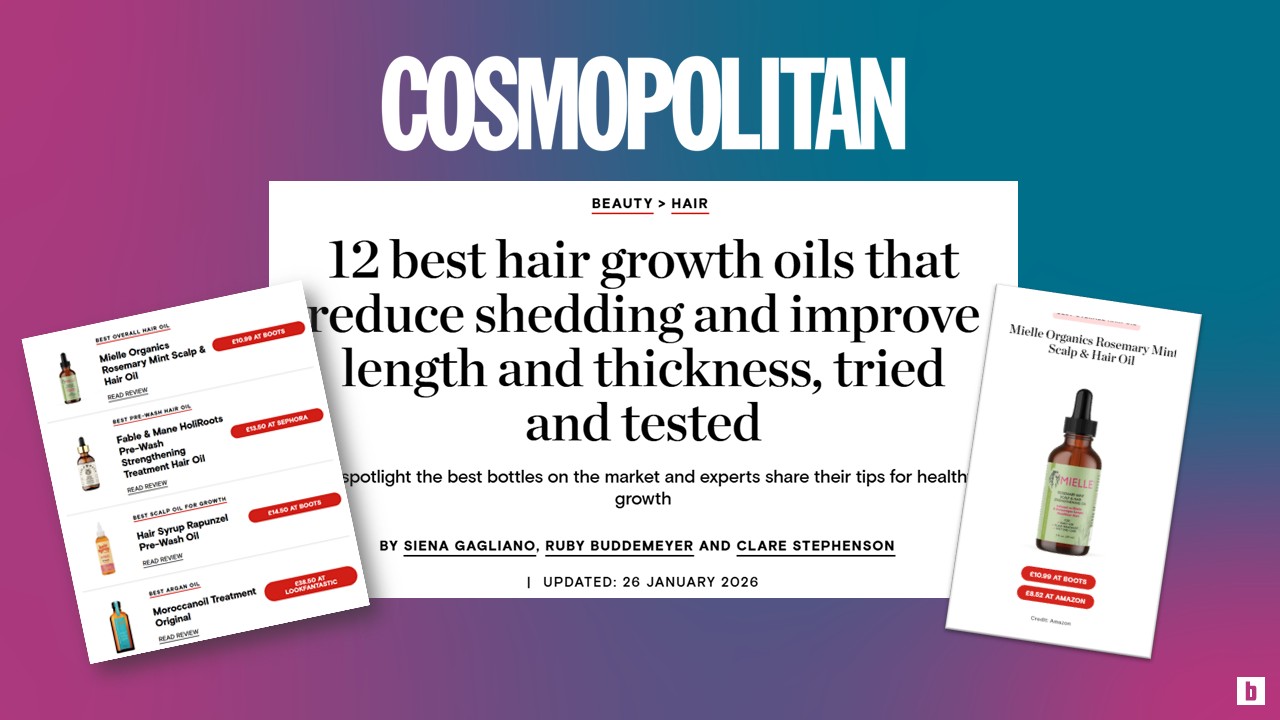
This blog explores that dynamic, prompted by the recent inclusion of one of our clients, a textured haircare brand in Cosmopolitan UK’s round up of the Best Hair Growth Oils for 2026.
Because in practice, the opposite is often true. Securing mainstream product placement for niche focused brands is less about forcing relevance, and more about understanding how editorial teams think, how audiences overlap, and how to position a product within a story that editors already want to tell. Here’s how we approach it.
1. Find the universal relevance
Specialist brands don’t automatically lack mainstream appeal. They often just haven’t articulated it clearly enough.
In beauty, few concerns are truly niche. Take hair growth. While certain hair types experience it differently, the underlying issue is universal. Thinning, breakage, scalp health, and strength are concerns millions of people recognise. Our role is to frame specialist benefits through that broader human truth. When you anchor a product in a widely understood need, it becomes legible to a much larger audience without losing its credibility.
This is where unique selling points and specialist ingredients matter. Ingredients like rosemary oil, castor oil, and plant-based actives may have originated in specific communities, but they now sit firmly within everyday beauty conversations. Consumers are increasingly curious, experimental, and informed. They want to understand what’s in their products and why it works.
When you articulate that relevance clearly, editors take notice.
2. Lean into media subcultures
Mainstream media is no longer monolithic. Many large titles are actively investing in subcultures and specialist verticals because they understand where audience growth is coming from. The shift away from mass consumerism towards more defined communities has created space for specialist brands to appear in unexpected places.
The key is research. Understanding which titles, sections and journalists are already speaking to audiences adjacent to yours allows you to find the overlap between brand, reader and editorial agenda. Cosmopolitan UK for example, created a Black beauty hub, to spotlight, uplift, and celebrate Black beauty, culture, and self-expression. Knowing that changes the conversation entirely. You’re no longer pitching a “niche” product into a broader title. You’re contributing something relevant to an existing editorial focus.
3. Build journalist advocacy, not just coverage
Product placement success rarely comes from a single email. It’s the result of long-term relationship building and becoming a trusted source for the right kinds of stories. You never know which conversation, sample or insight will open the door to future opportunities.
Editors at major titles are inundated with pitches. Standing out means becoming recognisable for the right reasons. That requires thoughtful, consistent outreach, a clear understanding of what each journalist covers, and the discipline to only pitch when it genuinely makes sense.
Trust builds when editors know you respect their audience and their time, and that what you’re offering will add value to their work.
4. Lead with a narrative hook
Even the best product needs a story. Editors are looking for angles their readers care about now. That means positioning products within wider narratives such as emerging trends, shifts in consumer behaviour, science backed innovation, or real-world results people can see and feel. Crucially, you need to be clear on why this product matters at this moment. Timeliness turns a good product into a compelling editorial inclusion.
Mainstream coverage for specialist brands isn’t about diluting who they are. It’s about clarity, context and craft. When you understand the audience, respect editorial culture, and tell stories that travel beyond a single community, specialist products don’t just fit into mainstream media. They elevate it.