
By Tapiwa Nyirenda, Junior Consultant
In the UK alone, brands are now spending over £1 billion a year on creator partnerships, with this set to increase to £1 trillion globally by 2030. A level of investment that makes clear, despite ongoing debates around the future of influencer marketing, this is a channel that is here to stay.
So perhaps the more useful conversation is not whether influencer marketing is in decline or on the rise, but rather, what needs to happen for this work to deliver better outcomes.
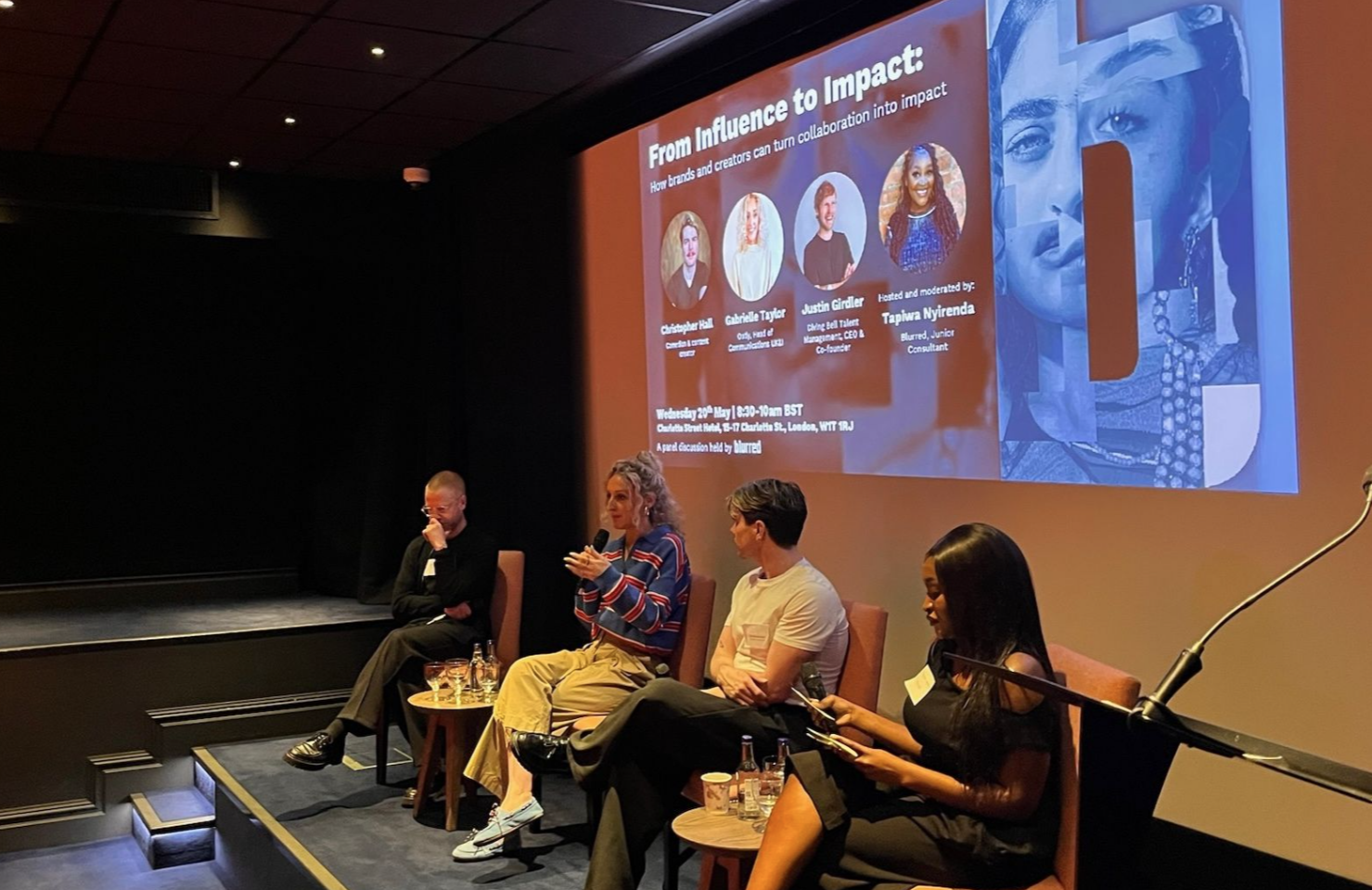
That was the focus of our recent panel discussion, From Influence to Impact. Which brought together brand, creator and talent management perspectives to explore how partnerships can move beyond visibility; towards stronger ideas, better collaboration and more meaningful impact.
We were joined by Christopher Hall, comedian and content creator; Gabrielle Taylor, Head of Communications, UK&I at Oatly; and Justin Girdler, CEO and co-founder of Diving Bell Talent Management. Each brought thoughtful, generous and practical perspectives to the conversation.
Because while reach, impressions and engagement still matter, they only tell part of the story. The creator partnerships with real resonance tend to be the ones that feel culturally relevant, trusted and native to the audience they are trying to reach. They are built on strong briefs, clear alignment and enough trust for creators to bring their own understanding of their audience into the work.
Across the discussion, a few themes came through clearly: the role of the brief, the value of long-term relationships, the importance of protecting creator voices, and the need to think more ambitiously about what impact actually means.
Here are five key takeaways.
A strong brief is worth its weight in gold
It may seem obvious, but a strong brief can make all the difference. Not just because it tells a creator what the brand needs, but because it creates the right conditions for them to do their best work.
That means being clear on the objective, audience, key messages and non-negotiables, without becoming overly prescriptive about the final execution. Creators need to understand what the work needs to achieve, but they also need enough space to interpret that message in a way that feels natural to their own platform, format and audience.
This isn’t about over-controlling the work or over-correcting and giving total creative freedom. Instead, a stronger middle ground is usually a clear strategic frame, paired with enough trust for the creator to make the content feel native.
From a brand perspective, getting internal alignment on the brief from the start also helps avoid trouble down the line. A brief that’s been approved by everyone from corporate affairs to the creative director and beyond translates to minimal rounds of approvals for the actual content.
Long-term partnerships matter, but test-and-learn has its place
Long-term partnerships are often held up as the ideal, and for good reason. They allow trust to build over time, both between the brand and creator, and between the creator and their audience. When someone understands the brand, its tone, its values and what it is trying to do, the work can often feel more natural and less transactional.
But there isn’t one fixed model for creator partnerships. Sometimes the right approach is to build depth with a smaller group of trusted creators who already understand the brand. Other times, it makes sense to bring in fresh voices who can help the brand reach a different audience, test a new idea or show up in a different cultural space.
The important thing is to be clear on what the partnership needs to achieve. If the goal is to build familiarity and brand meaning over time, a longer-term relationship may be the strongest route. If the goal is to reach a new audience, drive conversation around a launch or understand what type of content lands, a broader test-and-learn approach can be just as useful.
Either way, it comes back to intention. The strongest creator strategies are not always the biggest or the longest running. They are the ones where the model fits the objective.
Creators should be your mini creative directors
It’s worth remembering why brands work with creators in the first place. They are not just a route to reach, views or engagement. Creators are situated within culture; and their platforms show the real relationships they’ve built with their audiences. Often, that comes from understanding exactly what those audiences want to see, how they want to be spoken to and what feels relevant to them.
That audience relationship is the value. Creators have their own tone, format, and cultural lens that’s key to making brand ideas land. And in many cases, over-controlled or unnatural content is easy to spot and can go viral for all the wrong reasons.
Creators should be given autonomy over their own content, working within the strong brief that’s been created at the start. More often than not, less control can mean more impactful results.
It’s a cost-effective marketing stream so take risks
Compared to traditional advertising streams, working with creators can be a very cost-effective way of promoting or selling a product or service. And just as brands often take a test-and-learn approach in other parts of the marketing mix, creator partnerships should be no different. Whether it’s putting aside a budget pot to test new ideas and new creators or simply just taking risks on content, it’s important to make sure brands are fulfilling their real potential rather than always playing it safe with creators.
Measuring impact: is it just a vibe?
Ultimately this work needs to do something and not just deliver a message. Every brand will have its own view on what real impact looks like. Moving from outputs to real outcomes applies across brand activity but importantly with creators.
What does their content actually make their viewers go and do vs being able to add a big reach number on a wrap up report. And importantly don’t overlook gut instinct. If everyone involved feels the content, the comments, the interaction and the reach have done the job then that’s where the magic happens.
At its core, the conversation came back to one central point: creator partnerships work best when they are treated as partnerships. That means moving beyond the idea of creators as media placements or content suppliers and instead recognising the role they can play in shaping ideas, building trust and helping brands communicate in ways that feel culturally relevant.
Of course, the work still needs to deliver. It needs clear objectives; thoughtful measurement and a strong understanding of what success looks like. But if brands want creator partnerships to drive real impact, whether that is commercial, cultural or behavioural, they need to create the conditions for that impact to happen.