
By Gabe McCabe, intern
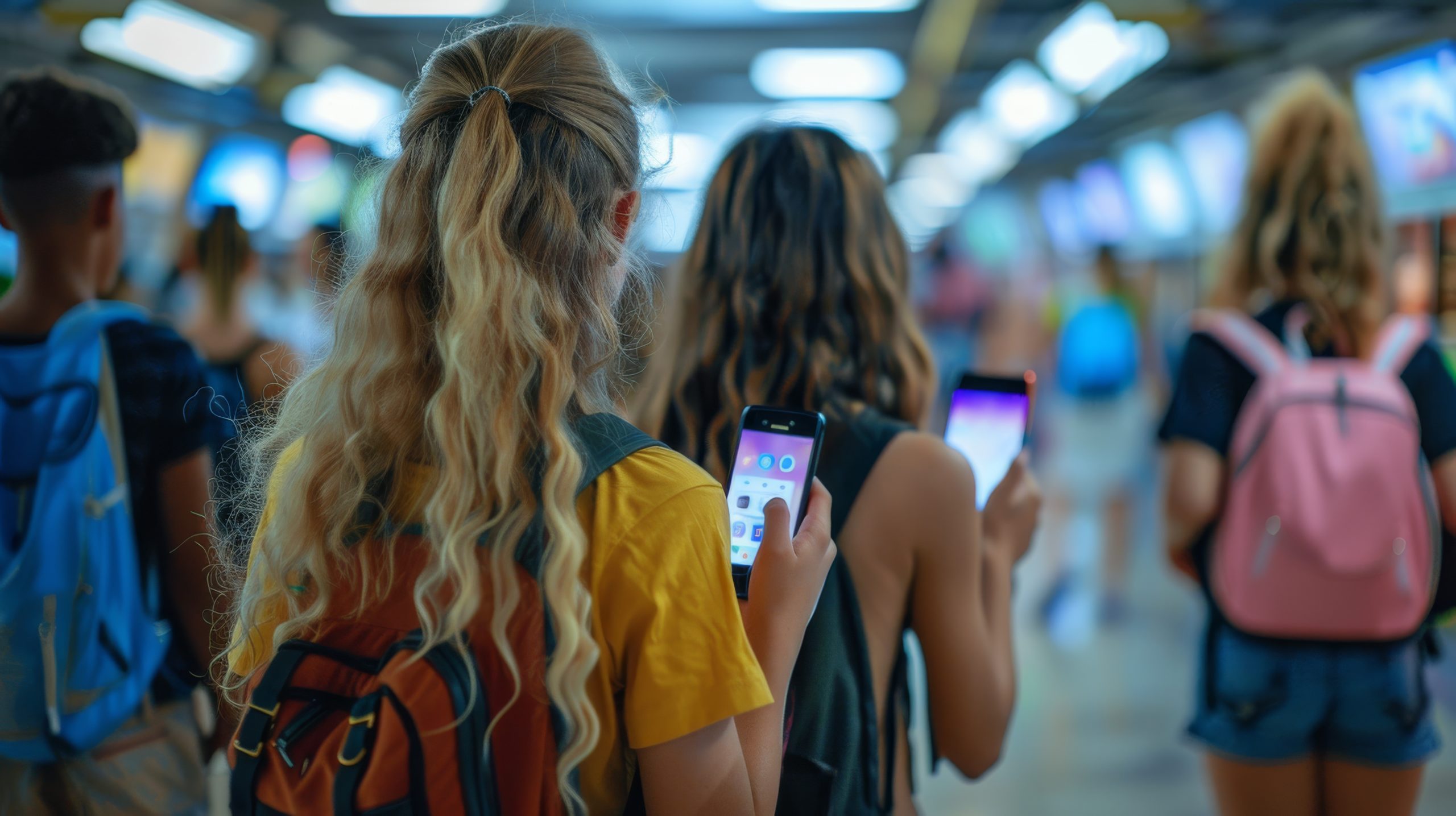
On the 15th of June, the government announced a ban on social media for under-16s. It was described as a line in the sand. A new normal for future generations that would “give kids their childhood back.” The legislation follows the model introduced by Australia last December, but goes further. Where Australia banned social media access, the UK will also restrict livestreaming and certain AI chatbot functions for under-18s. It is expected to reach Parliament before Christmas and come into force in Spring 2027, covering Snapchat, TikTok, Instagram, Facebook, X, and YouTube.
For a government to side with children’s welfare over the political and economic heft of big tech is rare. Across the world, governments have dithered, often leaving children to navigate the consequences. Britain has chosen differently, and that deserves recognition. But does the promise of the Good Old Days rest on a fundamental misreading of the world into which Gen Alpha was born? A 12-year-old in 2026 doesn’t experience the internet as a destination, but as mediator of social life. Their friendships, politics, and sense of self form there. It is impossible to legislate them back to a world that predates all of that.
The government’s legislation is sweeping in its ambition and a positive step forward. But does a blanket ban have the nuance necessary to account for a world where the same platforms linked to a 22% rise in self-harm hospital admissions among children in a single year also produced the most politically informed, globally connected generation in human history?
The ban does not cleanly separate the healthy from the harmful. As the boundaries between online and offline, public and private, and truth and misinformation dissolve, we must ask: where does this leave Gen Alpha?
Three areas of contention
If the ban achieves what the government intends (and the evidence suggests it will take years rather than months) its most profound effect will be cultural. Social media may no longer be the default backdrop to childhood. The comparison, the compulsion, the broken sleep and the anxiety that so many parents recognise, may become the exception rather than the norm. If there is a chance that children may be safer and happier, then it is a future worth building towards.
But ‘safer’ is not necessarily ‘without cost’. A ban draws a clear line, and as this generation knows better than any before it, clean lines rarely hold. For everything Gen Alpha is protected from, there are some things that they may lose.
One: digital fluency
Our recent Gen Alpha report described Alphas as co-creators rather than passive audiences. A generation that learns through remixing, rebuilding, and reimagining the digital world they were born into. One shaped by AI, algorithms, and the permanent blurring of online and offline. Delaying access does not prepare them for that world. It postpones the reckoning until they turn 16, at which point they gain full access without any prior literacy, scaffolding, or support, facing infinite scroll and misinformation that most adults still find difficult to navigate. There is a chance this leaves Gen Alpha more vulnerable once they are of digital age.
Two: identity and expression
Our report argued that for Gen Alpha, inclusivity is the baseline of reality rather than an aspiration. But that reality has arguably thrived on the platforms now being banned. For LGBTQ+ and neurodivergent young people in particular, these spaces offer community, recognition, and belonging that often do not exist where they live. The online world has been where many have found their voice. If the mission is to give children their childhoods back, this childhood must be meaningful. Accessible third spaces, safe streets, youth clubs. Remove digital communities without rebuilding physical ones, and you risk legislating a bedroom generation more isolated than the Gen Z one before it.
Three: civic voice
Gen Alpha are the most politically engaged and crisis-aware generation in history, but this is no longer the age of the broadsheet. Ofcom found that 57% of 12 to 15-year-olds now consume news on social media, with TikTok the most common platform and YouTube second. When 2024 saw turnout fall to its lowest since universal suffrage, political engagement may be worth preserving. Social media makes it easier for a young person to encounter, digest, and engage with the events shaping their future. Strip that away, and you risk disconnecting and depoliticising a highly-engaged generation. Counterintuitive for a government looking to enfranchise 16 and 17-year-olds before the next general election.
What this means for brands
The instinct that defines Gen Alpha, to create, belong, and be heard, does not disappear with the ban. The channels through which brands have been meeting that instinct do. Influencer marketing, gifting, TikTok-native campaigns, and Instagram activations are the dominant tools of youth brand communication, and after 2027, they will not reach the under-16 Alpha cohort.
In the UK alone, Gen Alphas command an estimated £3.3 billion in spending power and influence around a quarter of all household spending. Two-thirds of parents say they have discovered new brands through their children, and most went on to buy them. Cut off the platforms where that discovery happens, and you do not just lose a future customer. You lose the route to the family.
Therefore, if you cannot buy your way into their feed, you have to earn your way into their conversation. Genuine purpose must be central to a brand’s identity, as it serves as the only universal language that speaks fluently across generations. Additionally, as 1 in 3 Alphas now use LLM’s daily, high-quality, authoritative content is king for GEO. In both spaces, brands must be worth talking about because being worth talking about is now the only way you can reach Gen Alpha.
The stakes
Generation Alpha are inheriting a world unlike any other where AI, geopolitical conflict and climate emergency are all intermingled. They know this, and will expect brands and institutions to treat them honestly.
The government deserves credit for what it has done here. It has not been paralysed by the need for perfection, but stimulated by the need to protect. Yet on one point the experts are close to unanimous: this is not a magic bullet. It will only work if the government stays flexible, evaluates its impact honestly, and treats it as the first step of many rather than the finish line.
For brands, the task is the same as ever. Earn this generation’s trust, attention, and respect. Now though, you may have to do this somewhere new.