
By Stuart Lambert, co-founder
Most people in Britain now use AI. Few, however, feel part of the conversation about it.
The government’s first Public Engagement Survey, published in July, found that 59% of UK adults had used generative AI in the previous three months. Yet 74% worry that what it tells them may be wrong, 69% have concerns about privacy and security, and 57% fear it will dull people’s ability to think for themselves.
In short: millions of people are using a technology they don’t fully trust. A technology they were never taught about. And a technology that too few voices are even attempting to make worthy of trust.
That is a communications failure. The debate about AI is noisy, but it’s happening over most people’s heads.
Companies talk to investors about spending, scale and productivity. Engineers talk to each other about models and benchmarks. Politicians talk about growth and safety. Each conversation makes sense to its own audience. But none are aimed at the person using a chatbot to help with homework or a job application.
The irony is that these audiences are the same people. The fund manager or the MP goes home to a teenager revising with a chatbot. Our industry still loves to file people as ‘corporate’ or ‘consumer’ audiences, but in so many ways AI is showing how little sense that makes. Silo the conversation and you get siloed understanding.
Some studies put public trust in the big tech companies pushing AI as low as 12%. The people the public do trust are rarely in the conversation. According to the Public Engagement Survey, three-quarters trust university scientists and health charities for accurate information on science and technology; fewer than four in ten say the same of ministers and MPs. The voices doing most of the talking about AI are the ones people believe least.
Britain has solved a version of this problem before. In 1982 the BBC launched its Computer Literacy Project: a television series explaining what computers were, paired with a machine people could actually program. The BBC Micro found its way into most of the country’s schools, and a generation learned what computers could do by making them do it. I was one of them, learning about PCs by building them at a time when there was no internet to ask for answers. I have fond memories of figuring out how to extract a handful of extra kilobytes for RAM by tinkering with MS-DOS config.sys and autoexec.bat files back in the early 90s, just so I could play newer games on my limited Amstrad PC. My parents were terrified of these unfathomable machines. To me they were second nature, because I got under the hood of them to understand how they worked.
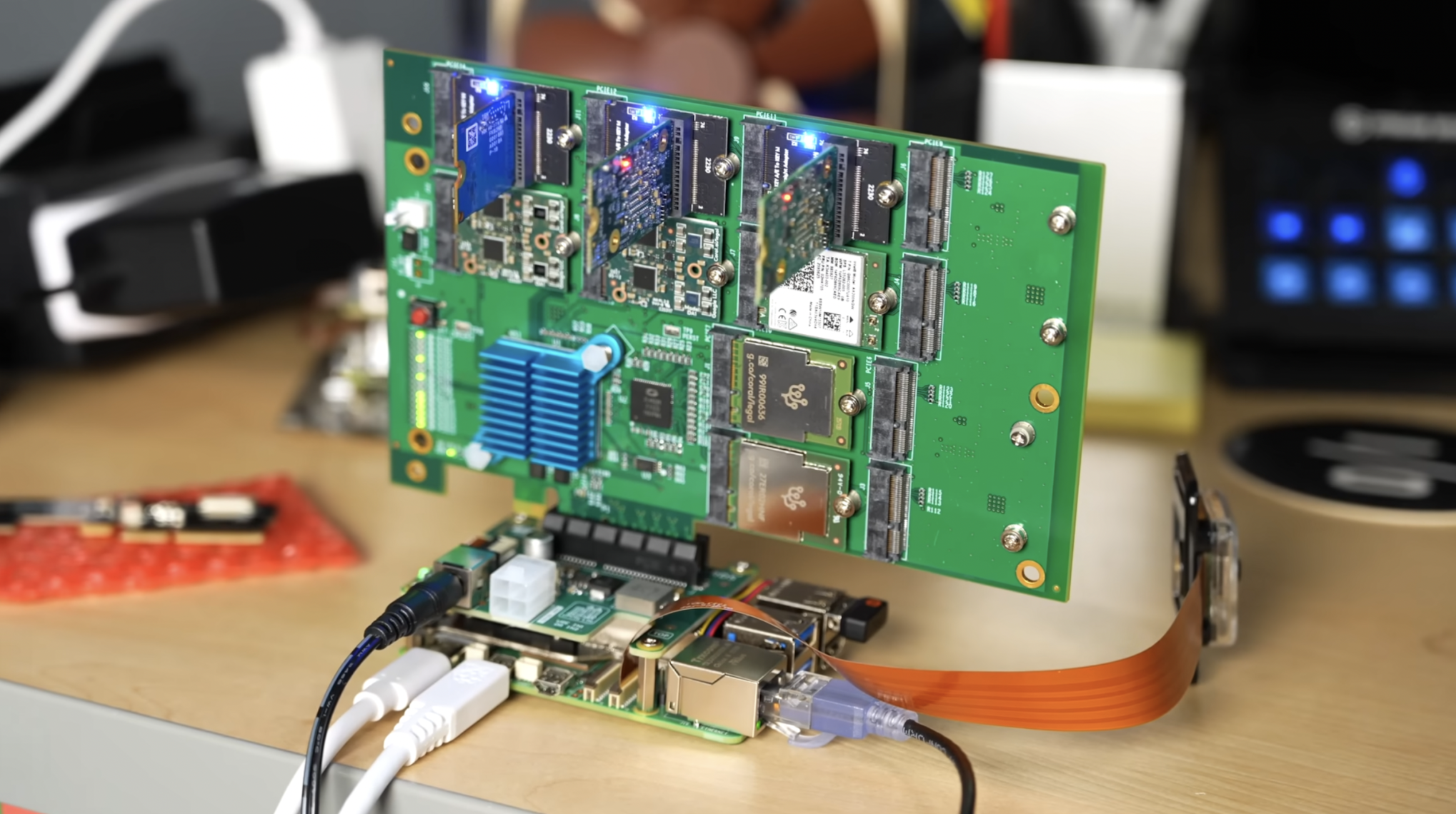
Raspberry Pi is a British success story that grew out of that same idea. Its co-founder, Eben Upton, learned to code on a BBC Micro and set out to build something that would do for a new generation what that machine had done for him. The Raspberry Pi Foundation, the educational charity behind the company, is doing more than most to make AI unscary, accessible, and something tangible. Putting it in the hands of humans, for humans to use their own human intelligence on, reminding us that AI doesn’t have to be something that’s done to us, but something that – shock horror – we have agency over. Something we can play with and learn about practically. Its free Experience AI lessons have reached an estimated 2.9 million young people, according to its Impact Report. My kids are among those numbers. They’re invited to train models of their own and see exactly where they go wrong. The result? Understanding. Nobody who has watched their own AI get something confidently wrong needs a lecture on accuracy.
Raspberry Pi – which, ironically, doesn’t employ many ‘professional’ (i.e. agency) communicators – understands how to communicate this stuff with candour and honesty. When the AI boom pushed up memory prices and forced the company to raise its own, the company explained why in plain language on its blog, and has since added lower-memory models so customers don’t pay for more memory than they need. That is AI’s effect on everyday prices, explained by the people who had to absorb it. It is rarer than it should be.
The lesson for everyone else is simple. As with most things, public understanding of AI will be earned through what companies do, and what they let people do, far more than through what they say. That holds for a bank or a supermarket as much as for a computer maker.
What does this mean for comms teams? Corporate communicators can close the gap. Three principles would help.
1. Write for the kitchen table, not the earnings call.
Most corporate AI communication is investor messaging recycled for everyone else. If your AI story only makes sense to an analyst, you don’t have a public story yet. Start with what changes for a customer, a patient or a pupil, and work back from there. Then give it the same creative craft you would give a consumer campaign; a dry explainer won’t cut through, however important it is.
2. Show the workings, flaws included.
People already worry about accuracy, privacy and cost. Naming those worries, and explaining what you are doing about them, builds more trust than polished reassurance. Better still, give people something to try: a demo, a tool, a classroom. Understanding that people build for themselves lasts far longer than anything they are simply told.
3. Hand the microphone to people the public believes.
Teachers, scientists and charities carry more weight on technology than chief executives or ministers. Often the best thing a company can do is equip them and step back. Point them at the people not yet using AI: almost a third of non-users say they don’t know enough to start,¹ which makes them one of the largest audiences there is.
There is a deadline of sorts. From September 2028, England’s new national curriculum will teach pupils how AI works, with a broader computing GCSE replacing computer science. A generation is about to learn AI properly in school, while many of their parents still feel shut out of the conversation.
The companies that help close that gap will earn something more valuable than attention: the public’s trust on the defining technology of the decade. That will take leadership rather than more thought leadership. So here is a question for every comms team with an AI story to tell: could you explain it at the kitchen table? The debate about AI will shape all our lives. It’s time it was held at eye level.
Image: A Raspberry Pi AI kit