
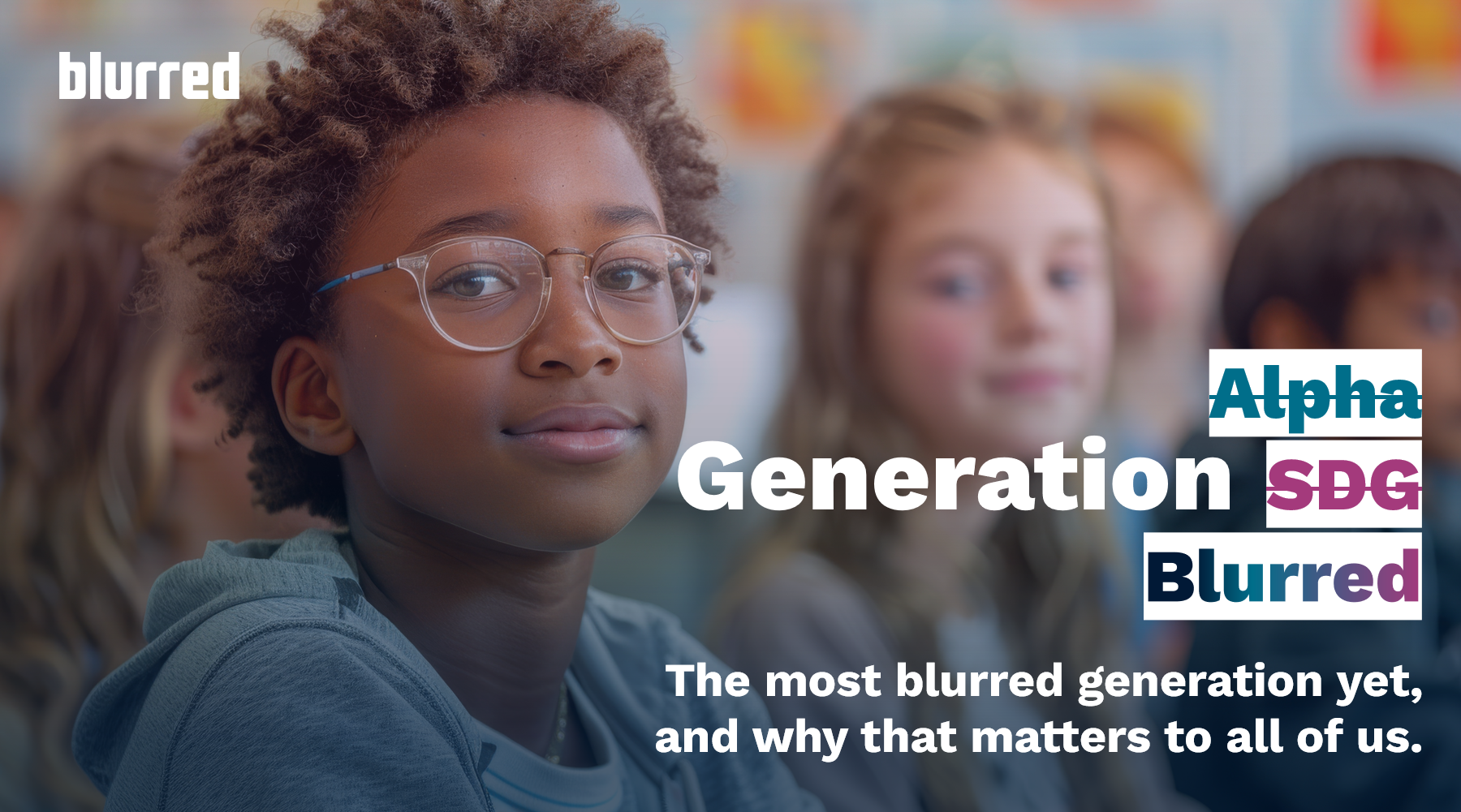
While every brand in the world has been talking about Gen Z, the last member of the generation that follows – Gen Alpha – has already been born.
There are two billion Alphas in the world, making it the biggest generation in human history. Given the state of the world, the problems that need solving and the unprecedented upheaval reconfiguring politics and society and markets, Gen Alpha will also be the most consequential.
Gen Alpha will be casting votes in the next UK election. By 2030, they’ll be living with the fallout of every Sustainable Development Goal being missed, as well as the failure to meet a generation of 1.5° climate promises.
Frustration with, or even resentment of, previous generations is likely to be acute as these two billion humans enter adulthood in the next few years, and realise they need to fix historic problems not of their making.
At the same time, these two billion consumers will have unprecedented spending power. Their economic footprint will reach $5.46 trillion globally within the next three years.
Gen Alpha’s emotions, attitudes and dollars will define the behaviours and fate of brands and businesses in every corner of the planet.
And those emotions and attitudes are shaped by a childhood and adolescence like nothing we’ve seen before. This is the first generation to grow up entirely in a world of smudged boundaries between work and home, between human and AI, between information and misinformation, between what’s a social issue versus an economic issue versus a climate issue.
Unlike any cohort before them, they are comfortable with things not being fixed, certain, or clear – including their own and others’ sense of identity.
Put simply: Gen Alpha does not experience the world in silos.
And brands hoping to earn this generation’s respect must abandon siloed communication strategies and remove the boundaries between audiences and experiences.
Firstly, Gen Alpha don’t remember a pre-smartphone world. Their normal is AI tutors, algorithm-curated feeds, and immersive platforms like Roblox.
They are co-creators, not passive audiences. A campaign designed for them cannot simply “land a message.” It must hand them tools to remix, rebuild, and reimagine. In this blurred environment, communication and product are inseparable.
Secondly, Alphas are acutely aware of crisis, even before they become economically independent. They’ve absorbed climate anxiety as ambient noise in childhood. In every study we can find, climate anxiety is one of the most significant drivers of self-reported mental health struggles.
This justifiably worried and passionate generation will not respect brands that perform sustainability in the comms function while ignoring it in the supply chain.
Thirdly, Alphas’ social world is defined by the blurring of identity. This is the most diverse generation in history, raised in an environment where representation, gender fluidity, and cultural multiplicity are not debates but just… the norm.
For them, “inclusivity” isn’t an ESG commitment, it’s the baseline of reality. Brands can’t just “target” identity groups; they need to communicate and market in ways that are porous, adaptive, and reflective of multiple lived truths simultaneously.
We’ve looked at some of the companies and brands who are Alpha-ready.
Lego, unsurprisingly, gets it. They’ve created blended physical and digital experiences, they demonstrate conviction about respecting parental concerns while giving children agency through user-generated content, and their corporate and consumer brands speak with one shared voice: little jargon, fewer corporate slogans, more play and challenge. The brands comms and products align.
The BBC is well geared up for Gen Alpha because, through programs like Newsround and its ‘Own It’ app, it assumes young people are capable and smart, acknowledges uncertainty and complexity and demonstrates rather than claims its public value. (Caveat – the Beeb must beware institutional defensiveness because Gen Alpha, even more than previous generations, will punish any hint of opacity or elitism…).
Vinted has cultivated a UK teen/tween resale culture where Gen Alpha are sellers, buyers, and sustainability participants simultaneously. For younger users (often selling with parental accounts), it makes circular economy tangible and social: instead of lecturing about fast fashion it becomes lived practice. Alphas are helping drive the platform’s growth by seeking affordable, trendy, and sustainable fashion, often mixing new fast-fashion finds with pre-loved items, influenced heavily by TikTok and YouTube Shorts trends like #Coquette, #y2kfashion, #thriftflip and #GRWM.
Octopus Energy has taken a distinctly Alpha-friendly approach to its ‘Octopoints’ rewards scheme, with kid-friendly explainers about smart tariffs that address Gen Alpha and parents simultaneously, teaching children about renewable energy while making it tangible through household participation.
These are just a few, deliberately varied, examples of companies and brands that look more ready for Alpha than most.
Generation Alpha will inherit a world unlike any other in human history. Technological frontiers being broken. The possible emergence of Artificial General Intelligence. Geopolitical uncertainty as the norm. Failed SDG targets.
Over the next decade, Gen Alpha will redefine the ideas and assumptions that structured 20th century society.
Brands that truly understand their ‘blurred’ world, make proof visible, hand over agency, treat inclusivity as normal and respect their intelligence can, in turn, earn Alphas’ respect and trust.
Those that don’t won’t just miss out on this generation’s incredible spending power: they will find themselves on the wrong side of the ballot box – and history.
Download our report, Generation Alpha is Generation Blurred, here.